
written by Zenith Arc Interior Design
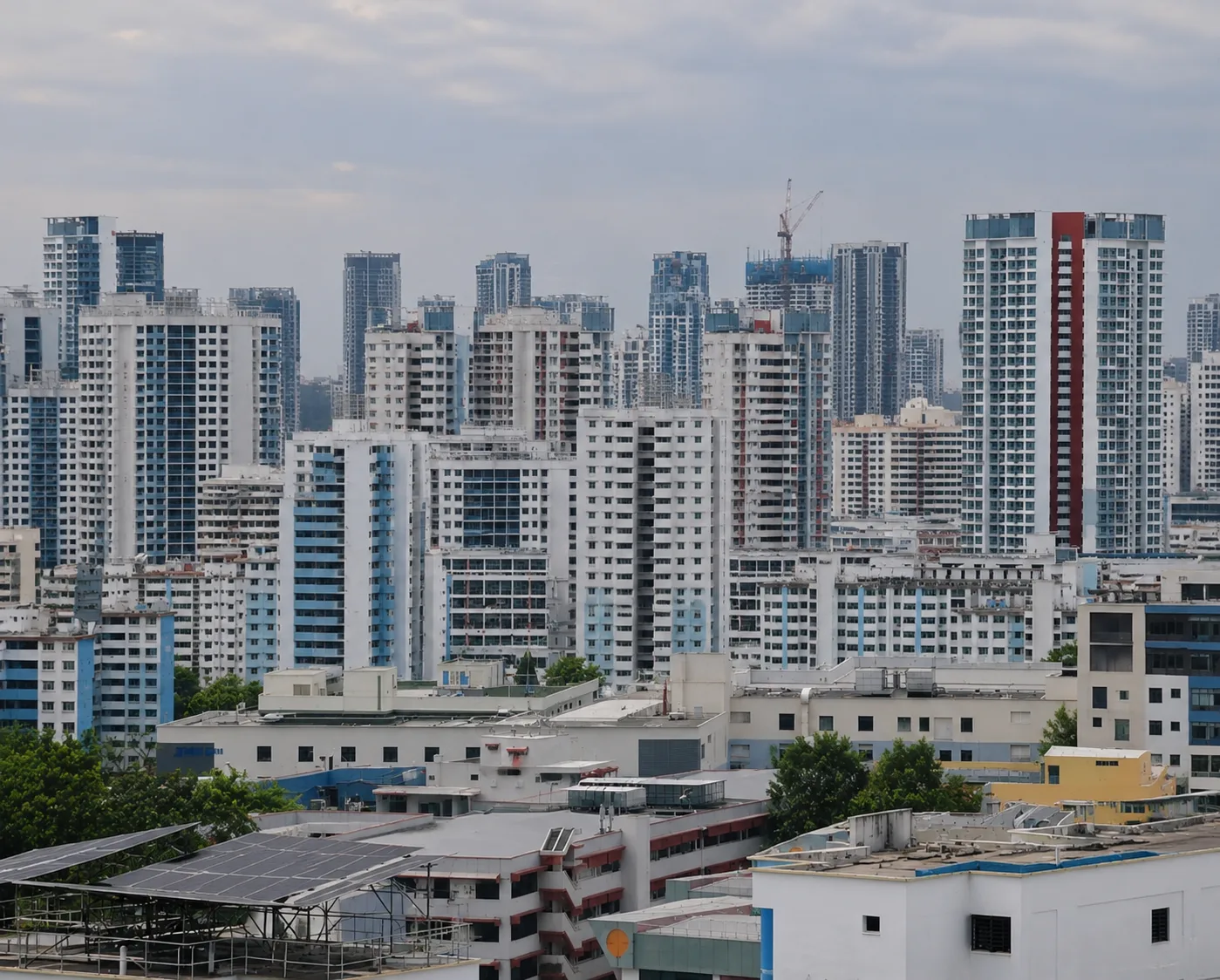
If you have been planning to right-size from a condominium into an HDB resale flat, the sequence of that move changed on 28 July 2026 — and the part that changed most is not the buying. It is the renovation.
Until this week, downgraders were forced into an awkward order: sell the condo, move out, rent for fifteen months, buy the flat, then renovate under time and cost pressure while paying someone else’s mortgage. That gap is now gone. You can buy the resale flat while you still live in your condo, renovate it properly, move in when it is finished, and sell the condo afterwards.
This guide covers what that means practically — the new sequence, what a larger resale flat actually costs to renovate, how long it takes, and where HDB’s rules will and will not let you recreate the finish you are used to.
The Ministry of National Development announced that private residential property owners and former private property owners can now buy a non-subsidised HDB resale flat with no wait-out period, with immediate effect. It applies to buyers of all ages and to flats of any size. Previously the exemption was limited to Singapore citizens aged 55 and above buying a four-room or smaller flat.
Two conditions have not changed:
For the full eligibility conditions, check HDB’s website and the MND press release directly. We are an interior design firm, not property advisers — please confirm your own eligibility with HDB or your conveyancing lawyer before you commit to anything.
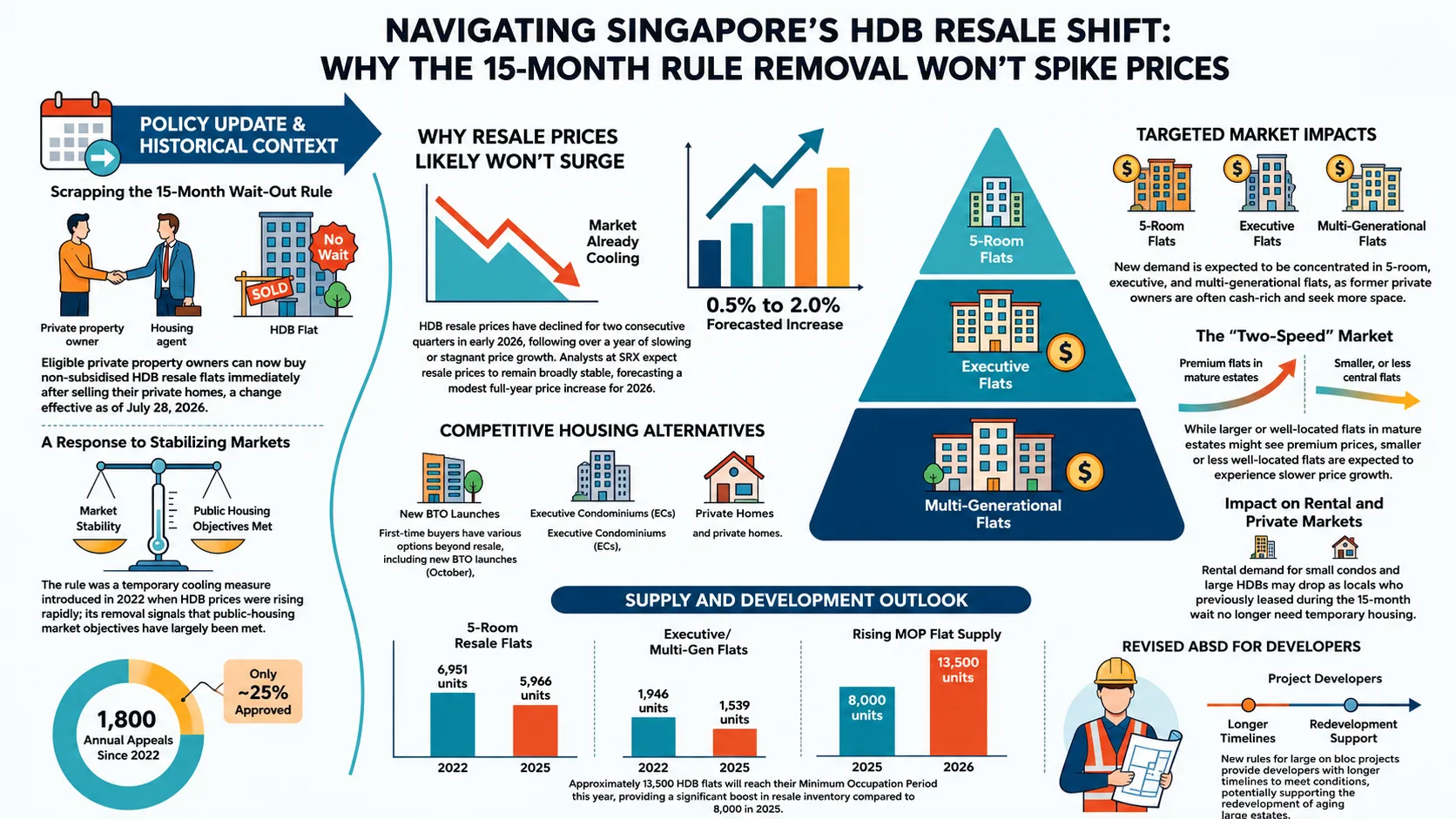
The old rule did not just delay your purchase. It compressed your renovation.
Under the fifteen-month wait, most downgraders were renting. Every additional week of renovation was another week of rent on top of the works. That pushed people towards the fastest possible programme rather than the right one — overlay instead of hack and re-lay, keep the existing kitchen carcass, skip the rewiring, live with the layout. We have inherited a lot of those flats a few years later, when the shortcuts surfaced.
Removing the wait-out removes that pressure entirely. If you can buy the flat while you still have somewhere to live, the renovation stops being a race. You get:
The trade-off is real, though: during the overlap you are carrying two properties. That makes schedule certainty the thing you are actually buying from a renovation firm, not the lowest quoted figure. A four-week overrun costs you a month of overlap you had not budgeted for.
The one thing to watch: step 7’s deadline is fixed from step 3, not from when your renovation finishes. If you buy in January, your condo must be sold by July regardless of whether the flat is ready. Plan the marketing of your condo alongside the renovation, not after it.
Property analysts expect this change to bring demand into five-room, executive apartment and maisonette stock — the larger flats that suit households moving out of a condo without moving into something cramped.
That segment is almost entirely older stock. A 1980s executive maisonette or a 1990s jumbo flat gives you space and volume that no new BTO can match, but it comes with original wiring, original waterproofing, and a layout drawn for a different era of family life. These are full renovations, not refreshes. Budget and programme accordingly.
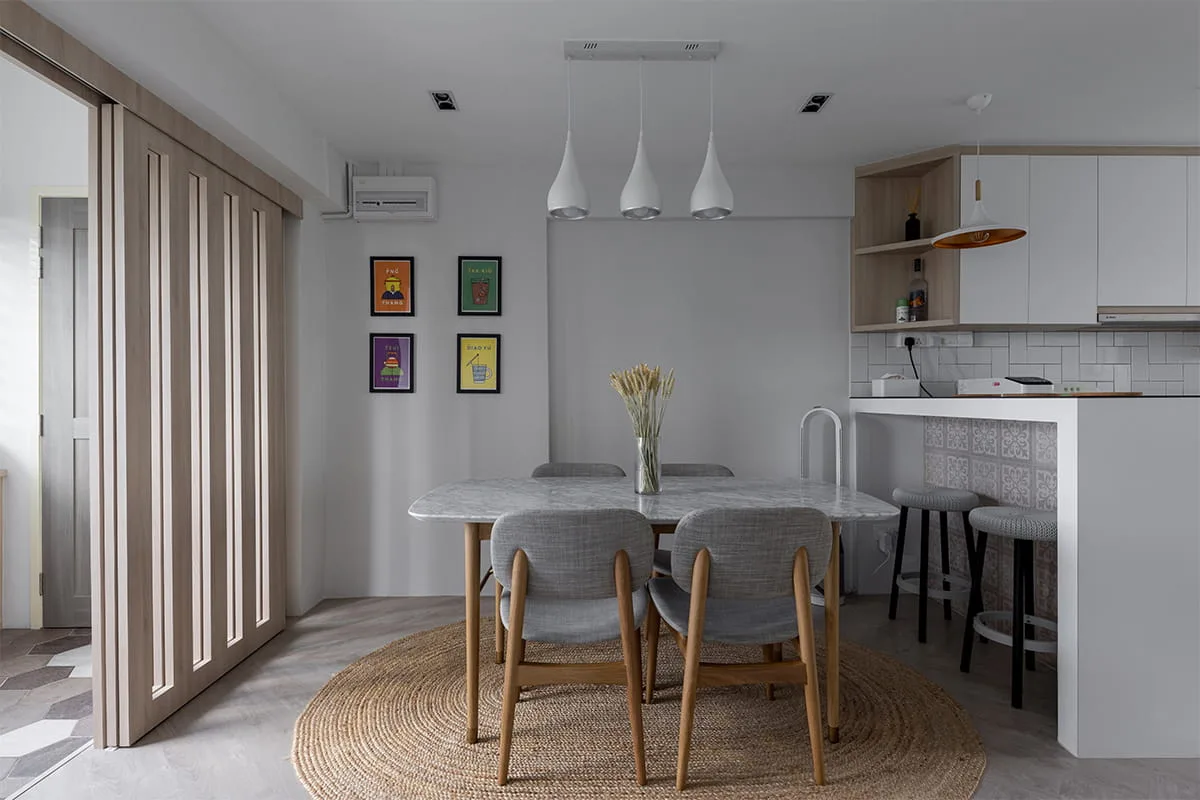
This is where most downgraders get their expectations recalibrated, so it is worth being direct about it.
What does not translate:
What translates, and translates better than people expect:
| Flat type | Full renovation range |
|---|---|
| 4-room resale | $70,000 – $81,600 |
| 5-room resale | $80,800 – $98,900 |
| Executive apartment | $84,000 – $120,000 |
| Executive maisonette | $91,200 – $134,800 |
| Jumbo | $101,000 – $155,900 |
Two things worth understanding about how these numbers behave when you come from a condo:
The fixed costs do not shrink with the flat. Kitchen, bathrooms, rewiring and waterproofing cost roughly what they cost regardless of floor area. So a smaller home does not deliver a proportionally smaller renovation bill — the per-square-foot figure goes up as the space gets smaller, even though the total goes down.
And resale carries costs that new build does not: demolition and disposal, making good behind forty years of finishes, replacing services rather than extending them. If you are benchmarking against a friend’s BTO quote, you are comparing two different exercises.
You can work through indicative figures for your own scope using our renovation cost calculator.
Expect 10 to 14 weeks on site for a full resale renovation, plus three to four weeks of design and permitting before that. Anyone quoting you a month for a full resale programme is either not hacking, not rewiring, or not telling you the whole plan.
A typical twelve-week programme runs roughly:
| Weeks | Stage |
|---|---|
| Pre-site | Design development, material selection, HDB permit submission |
| 1 | Hacking, demolition and disposal |
| 2–4 | Masonry, wet works, waterproofing and ponding test |
| 3–6 | Electrical and plumbing first fix, ceiling framing |
| 5–8 | Tiling and flooring |
| 7–10 | Carpentry installation |
| 9–11 | Painting, second fix, glass and mirror |
| 12 | Defects rectification and handover |
Two HDB rules shape this schedule and are worth knowing before you sign anything. Noisy works — hacking, drilling, tile cutting — are restricted to 9am to 5pm on weekdays only, never on Saturdays, Sundays or public holidays. And demolition works cannot be spread across more than three consecutive days, which means a competent contractor concentrates the loudest phase into one short block at the start rather than dragging it across the job.
Do I still need to sell my condo before buying an HDB resale flat? No. As of 28 July 2026 there is no wait-out period for a non-subsidised resale flat bought without an HDB loan. You must still dispose of your private property within six months of completing the flat purchase.
Does this apply if I’m taking an HDB housing loan? No. The 30-month wait-out still applies if you take an HDB loan, buy a subsidised flat, or buy an Executive Condominium from a developer.
Can I renovate the flat before I move out of my condo? Yes, and for most downgraders this is now the main practical benefit of the change. Renovating an empty flat is faster, cleaner and produces better work than renovating around a family living in it.
How long does a resale flat renovation take? Ten to fourteen weeks on site for a full renovation, plus three to four weeks beforehand for design and HDB permit approval.
Can an HDB flat be made to look like a condo? Partly, and the parts that matter are achievable. Ceiling height, glazing and balconies cannot be changed. Lighting design, joinery proportion, integrated appliances and material quality can — and those account for most of the perceived difference.
What can’t I hack in an HDB flat? Structural reinforced concrete: load-bearing walls, beams, columns, floor slabs and the household shelter. No permit exists for these works. Non-structural partition walls can be removed with an approved HDB permit.
Thinking about right-sizing? Zenith Arc has completed over 10,000 projects across HDB, condominium and landed homes in Singapore, and we are CaseTrust-accredited, BCA-registered and HDB-licensed. Book a consultation at our INSPACE showroom to walk through your flat’s floor plan before you commit to an offer.